



Supporting students with intellectual disability at university

Overview
Australians with disability have the right to access all levels of education on an equal basis and without discrimination. This right is stated in the UN Convention on the Rights of People with Disability. However, at the moment young people with intellectual disability do not have many opportunities to attend university. The research team wanted to know more about two programs run by universities that support the inclusion of students with intellectual disability – Flinders University’s ‘Up the Hill Project’ and the University of Sydney’s ‘Uni2Beyond’ program. This project looked at what these programs can show us about including people with intellectual disability more in Australian higher education.
This project looked at:
- How the two programs work
- Their benefits
- Program data
- Interviews with alumni from each program
The evidence collected will help shape future opportunities and Australian policy guiding the inclusion of people with intellectual disability in higher education.
The research team employed two co-researchers with intellectual disability who are also alumni of the two higher education programs studied. They played central roles and shared decision-making power in:
- Recruiting and interviewing participants
- Developing and implementing case studies from interviews
- Developing easy-read consent and information sheets
- Recruiting and preparing advisory groups
- Sharing research outputs, including presenting at two national conferences
- Actively contributing to collaborative research meetings.
An Expert Advisory Committee for the research project included seven more alumni of the two programs. The committee played a leading role in developing best practices for inclusive higher education and sharing the research findings.
See infographics below for a visual summary of the project’s findings.
- Students in the programs were mostly young (18-25) and middle- or upper-class
- Average enrolments across both programs is less than 10 students per year
- Numbers are limited by available funding
- Keeping detailed and accurate records about people with intellectual disability from a range of backgrounds is important
Interviews
- Mostly positive experiences
- Students enjoy learning and being able to choose what to learn
- Students experience social development and inclusion
- Students go on to further opportunities after graduating (e.g. paid employment; further study)
- Some students found it hard to make friends and felt excluded from mainstream university life
- Some students reported lack of post-program direction, support and planning
Further research is needed into facilitating meaningful social inclusion.
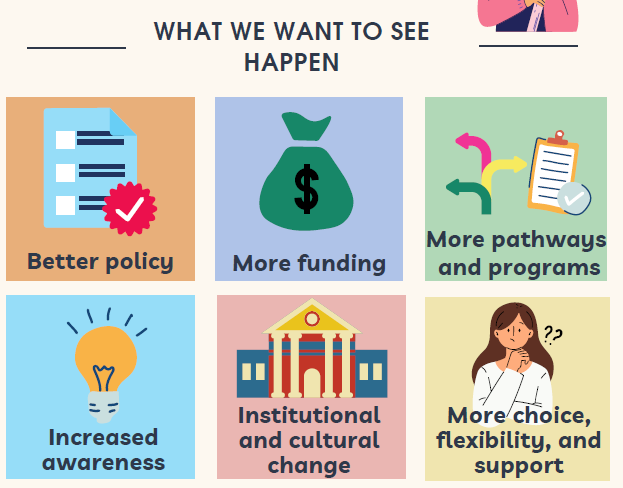
The findings from this research will be shared widely through:
- Two Australian roundtables with representatives from Australian universities and key higher education stakeholders
- National Position Paper to influence government policy
- Community of Practice on inclusive universities for people with intellectual disability
- A guide for universities on best practices for running an inclusive program
- Program student stories in Easy English summaries, fact sheets, infographics, videos
- Three peer reviewed academic articles will be published
Resources
Partners
Project teams
Dr Nikki Wedgwood
The University of Sydney
A/Prof Mary-Ann O’Donovan
Centre for Disability Studies
Angela Ho
Centre for Disability Studies
Greta Westermann
Centre for Disability Studies
Dr Fiona Rillotta
Flinders University
Matthew Turnbull
Flinders University
Nadia Willis
Flinders University
Key documents
Demographic data (infographic)
DownloadStudent experiences (infographic)
DownloadPositives and challenges (infographic)
DownloadViewpoint: Australia's obligations to include people with intellectual disability in higher education
DownloadEasy read position paper - people with intellectual disability going to university
DownloadUniversity for people with intellectual disability – a national position paper
DownloadRelated funded projects
Policy research
Yarning Pathways: Understanding Employment Journeys for Aboriginal and Torres Strait Islander Young People with Disability
Aboriginal and Torres Strait Islander young people with disability often navigate multiple systems and services when moving towards employment. This Aboriginal-led project will explore the employment journeys of young people aged 18-25, identifying the factors that support successful transitions to work and the barriers that can limit opportunities. Through culturally grounded yarning with young people, […]
Policy research
Improving employment outcomes for young people with disability: making genuine decisions using NDIS Employment Assistance
Young people with disability can face significant barriers when transitioning from education to employment. This project will examine how NDIS employment supports are used and experienced by young people with disability, their families and supporters, and disability support providers. Combining analysis of NDIS data with insights from young people, families and providers, the research will […]